
A Stark Industrial Art-Rock Single That Questions Control, Conformity, and Disappearance
listen to the article

DIE DIE BE make music that seems to register in the body before it fully resolves in the ear. On Erased Faces
, their collaboration with Dimitri Barbati, that physical immediacy takes on a colder, more claustrophobic shape. Industrial textures scrape against blurred voices, electronics accumulate like pressure behind a wall, and the rhythm advances with an almost mechanical restraint. Sounds surface, distort and disappear before they can become comfortable, leaving the track suspended somewhere between ritual and alarm.
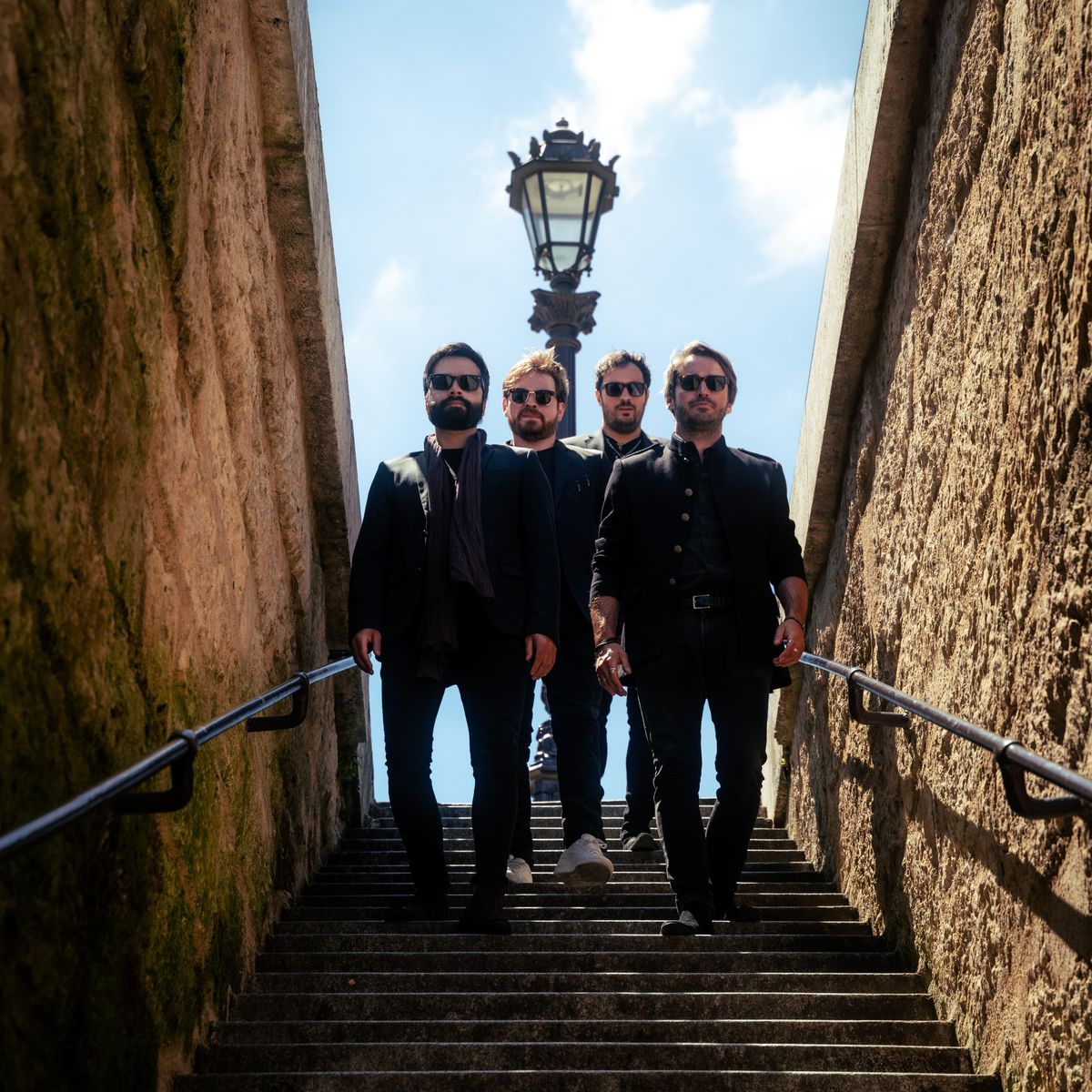
Formed by Liliane Bürli and Bujar Berisha, the Swiss experimental art-rock project works in a space where performance, confrontation and repetition become inseparable from the music itself. There is little distance between idea and impact. Drums strike with blunt insistence, synthesizers carry a metallic tension, and vocals function less as ornament than as another physical element within the arrangement. Erased Faces
pushes that language further into unease, with Barbati adding another presence to a track already concerned with the instability of identity.
At its centre is a stark question about what remains when a person is reduced to something legible to a system: an image, a role, a document, a symbol. The song begins in the language of bureaucracy, imagining a face removed from papers and a human life compressed into something that can be classified, processed or discarded. From there, its frame widens. Institutions, ideology, faith and collective pressure become parts of the same machinery, structures capable of erasing difference precisely by insisting that everyone become recognisable on their terms.
But Erased Faces
does not treat disappearance as a simple act of violence. Running beneath the song is a more unsettling possibility: that losing the prescribed self might also contain a form of release. There can be relief in slipping free of the image others have assigned you, even as that same facelessness carries the threat of becoming anonymous, interchangeable or powerless. The song keeps those meanings uncomfortably close. Erasure can be imposed from outside, but the dissolution of identity can also become a rejection of ego, expectation and the demand to remain fixed.
The vocals deepen that ambiguity. Rather than spelling out an argument, they circle particular ideas, repeat them and allow language itself to begin breaking apart. Meaning becomes unstable through accumulation. A phrase can sound declarative on its first appearance and almost emptied out by its fifth. That repetition connects Erased Faces
to DIE DIE BE’s wider engagement with migration, labour, intimacy and self-exploitation, subjects they approach not as abstractions but as pressures experienced through the body. Their music rarely stands outside those conditions to observe them. It enters the mechanism and listens to what happens under strain.
The official video carries the same logic into a stark visual register, returning again to the face as both marker of individuality and surface onto which identities are imposed. Its central absence raises the song’s question without resolving it: when the face disappears, has the person been stripped of something essential, or escaped a definition that had already become a trap?
That uncertainty is where Erased Faces
remains most unsettled. Art-rock abrasion, electronic severity and post-punk tension become tools for examining who gets to define a person in the first place. DIE DIE BE and Barbati leave the listener with no clean distinction between liberation and disappearance, only the uncomfortable possibility that the line between them may depend on who is doing the erasing.
If you would like to submit your music for playlist or feature consideration, please submit here via our partnership with MusoSoup.