

Detroit-Bred Songcraft With An Eye For The Absurd
listen to the article
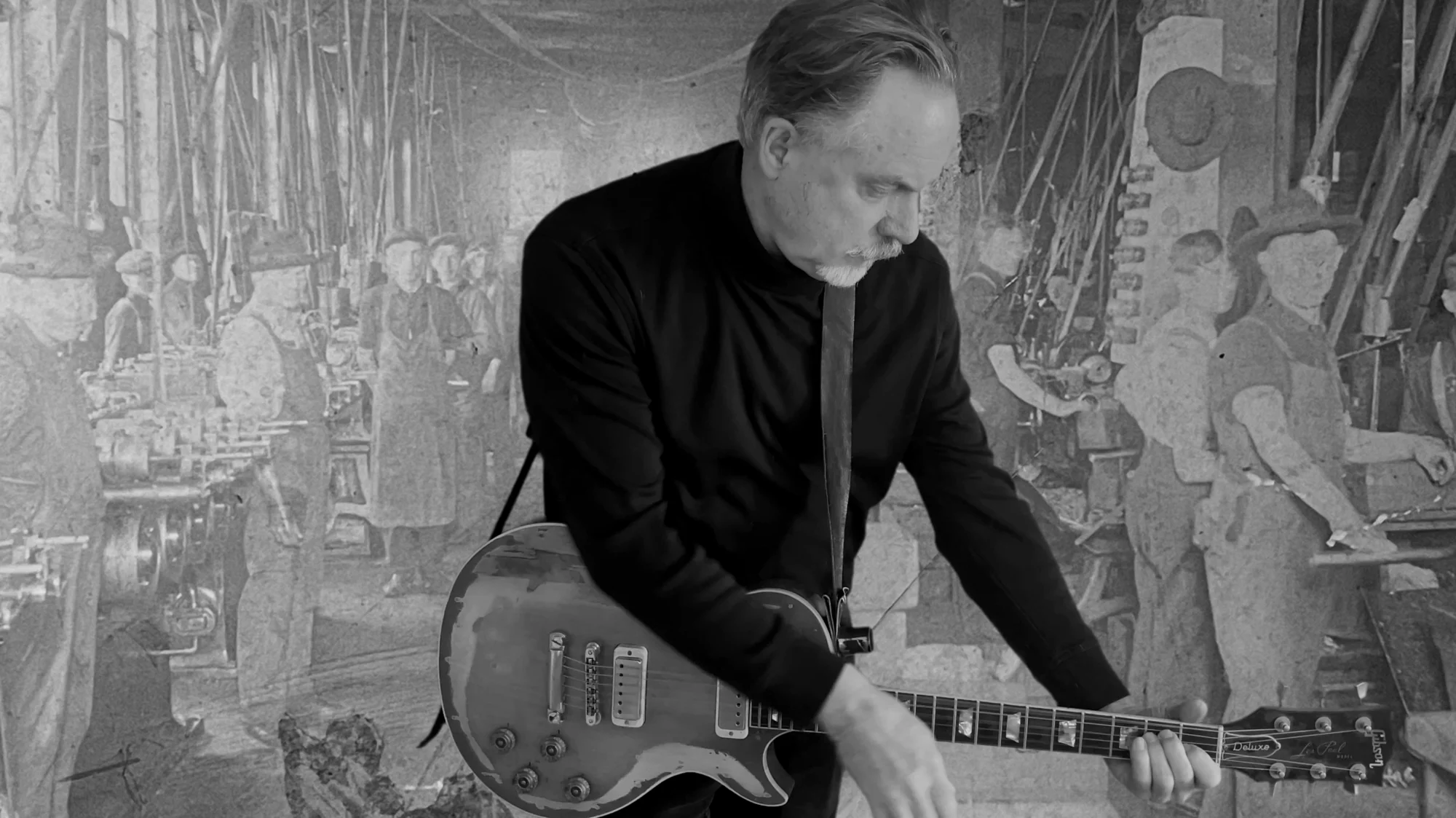
An industrial spray-paint booth is an unlikely place to look for a song, but Tom Kuhr finds one there on Come Along Little Brother. The Spyderhuff multi-instrumentalist and singer-songwriter steps into Americana, folk-rock, blues and country with a collection alert to the absurdities of daily life. Rattle Can
, his spray-booth work song, gives that outlook a particularly tangible setting. Kuhr’s subjects have dirt under their fingernails.
That attention to the everyday is central to his writing. Sarcasm and irony give him room to examine familiar situations from an awkward angle, finding humour in places that might otherwise pass unnoticed. The approach keeps the record’s Americana frame connected to working life. For all its roots in established musical traditions, the material makes space for the peculiar details of an ordinary day.
A big part of the project comes from Don Beyer, whose contributions span composition, mixing, mastering, bass and keyboards. Kuhr and Beyer grew up together around Detroit in the late 1960s and early 1970s, with a shared musical history reaching from jazz-fusion to hard rock. That background gives the collaboration a depth beyond the usual supporting-player credit. Come Along Little Brother brings two musicians with a long history into a different setting, carrying their experience into songs built on a more intimate scale.
The title track takes inspiration from The Night of the Hunter, bringing a thread of gothic imagery into the collection. Road Map
pairs lap steel and fingerpicked dobro with keyboards, drawing on a palette that suits the album’s movement between roots styles. Then Rattle Can
brings the focus back to the spray-paint booth. These are distinctive starting points for songs: a film’s dark imagination, the possibilities of a roots arrangement, the repetitive business of work. Kuhr gives the unglamorous subject room alongside the evocative one.
Elsewhere, Amazing Grace
receives a rock-oriented reinterpretation, while Jesus Just Left Chicago
returns to a song Kuhr had wanted to record for years. His explanation carries the dry wit that runs through the project: ‘Jesus Just Left Chicago’ is a song I wanted to do for years, but I just needed to get my voice older.
It is a revealing way of thinking about a cover, letting time become part of the preparation.
If Spyderhuff showed one side of Kuhr’s instincts, Come Along Little Brother gives his songwriting another frame. The Detroit connection remains in the history shared with Beyer, while the songs move through older musical forms with an interest in present-tense human oddity. Kuhr finds room for the sacred and the workaday on the same record. The distance between them can be shorter, and funnier, than it first appears.
If you would like to submit your music for playlist or feature consideration, please submit here via our partnership with MusoSoup.