
A Porch-Side Goodbye Turned Into A Bright, Tender EDM-Pop Confession
listen to the article
Seth Walker’s “Just One More”
begins in an Iowa living room: a porch swing outside, a brown recliner nearby, and Walker sitting beside his mother as the lyrics took shape. He shared each line with her while writing, turning the song into a record of time spent together before the drive back to Florida placed several states between them again. That intimacy remains embedded in the finished track, where memory arrives through ordinary rooms, familiar furniture, and the quiet knowledge that none of it can be held forever.
Walker had stepped away from singing for years before returning at his mother’s request. She was living with Parkinson’s Plus, specifically corticobasal degeneration, and wanted to hear him sing again. The request gradually grew into a body of original material shaped by distance, illness, and the family’s effort to remain present through an uncertain period.
“I never set out to become an artist. I simply wanted to make my mother happy, honor our journey together, and give a voice to families living with Parkinson’s Plus,” Walker says. “Just One More”
carries that purpose without reducing his mother’s experience to a broad message about loss. Its focus stays close: another conversation, another visit, another afternoon that once seemed unremarkable.
The arrangement begins with sparse piano, giving Walker’s vocal enough room to sound exposed without becoming theatrical. Tropical house rhythms enter gradually, joined by glowing synthesizers and stacked harmonies. Rather than mirroring the lyric with sombre production, Walker places it against steady movement and warmth. The beat keeps advancing while the words look backward, creating a tension between what memory preserves and what time continues to take.
That contrast places the song between EDM-pop and folk storytelling. The production carries the polished lift associated with artists such as Kygo, while Walker’s writing remains grounded in specific places and family details. Each electronic element supports the narrative rather than pulling it toward abstraction. Even at its brightest, the track retains the unease of someone counting departures and wondering which visit might be the last.
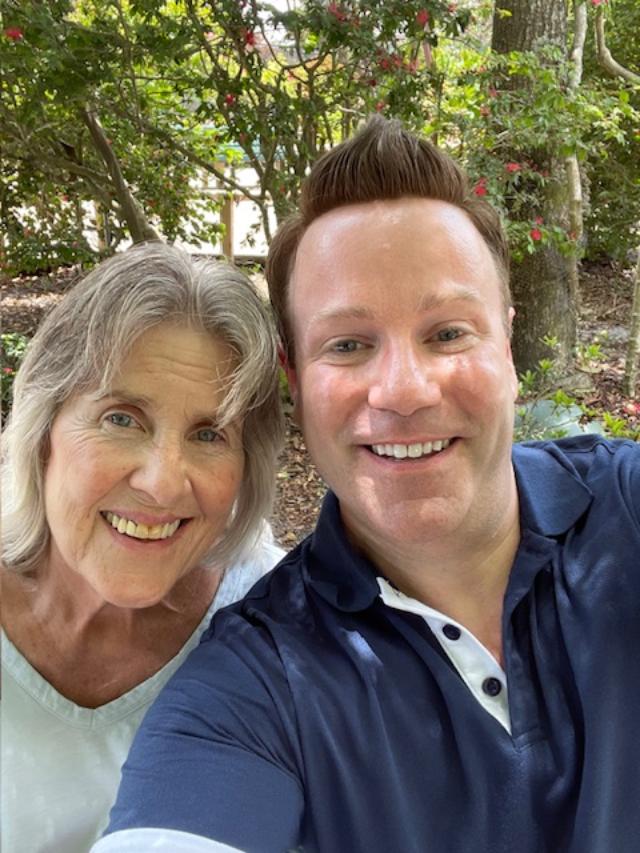
The cover artwork extends the song’s personal archive. Based on a photograph of Walker and his mother sitting together on the porch swing, it gives the release a visual point of origin. The image belongs to the same domestic world as the lyrics: not a symbolic recreation, but a moment the family actually occupied.
Technology helped Walker construct the recording, but the song’s centre remains unmistakably human. Piano, programmed rhythm, harmonies, and synths gather around a simple desire that cannot be solved through production: more time with someone you love.
“Just One More”
does not attempt to make peace with the possibility of goodbye. It stays with the wish itself, returning to the modest moments that become enormous only when their number begins to feel finite.
If you would like to submit your music for playlist or feature consideration, please submit here via our partnership with MusoSoup.