
A Warm, Melodic Piano Record Where Melancholy, Memory, And Warmth Move One Luminous Phrase At A Time
listen to the article
Magdi Aboul-Kheir
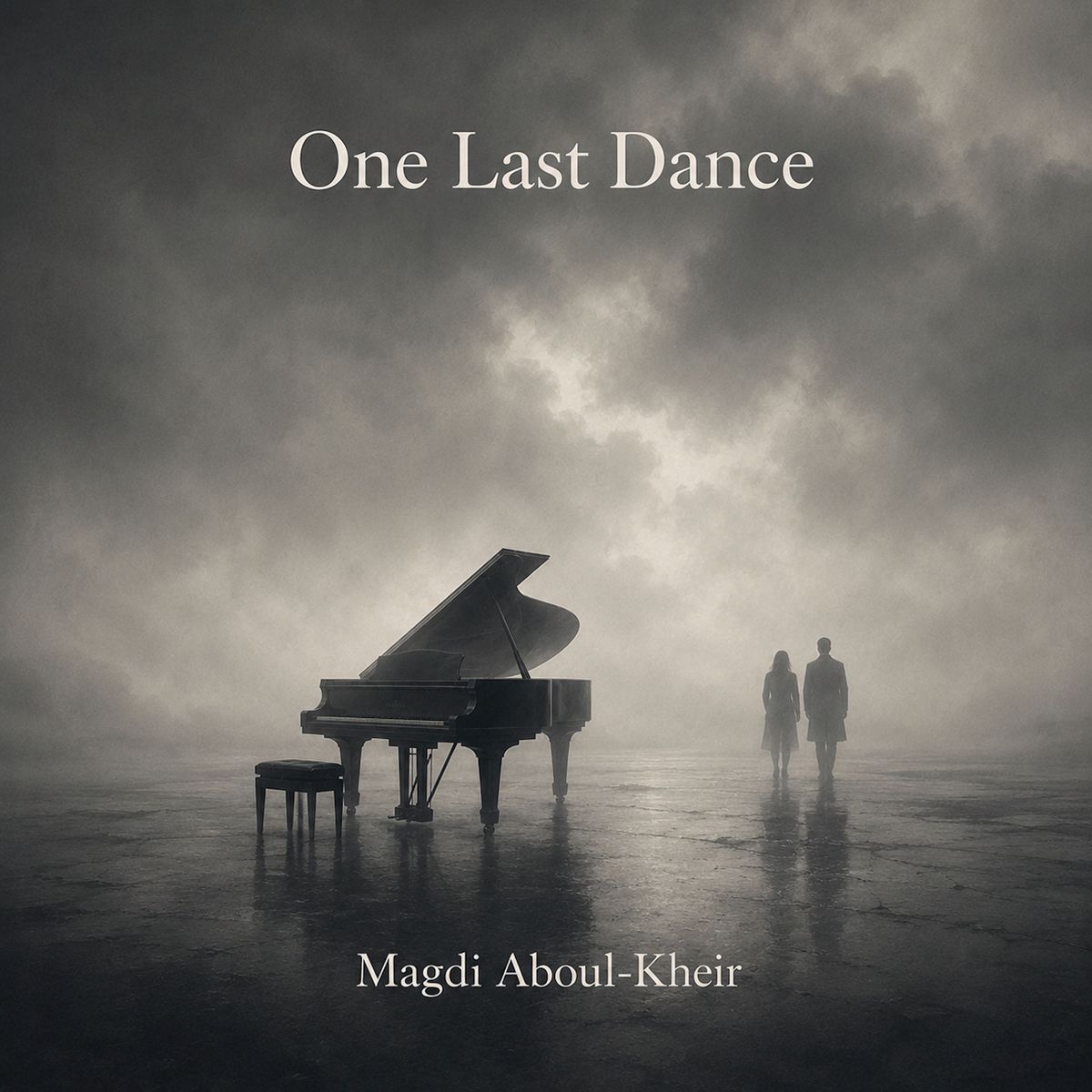
makes the piano feel like a room you can walk into: hushed at the edges, warm at the centre, and full of small movements of light. On One Last Dance, the Germany-based composer opens that room wider, shaping ten pieces that move between tenderness and lift, melancholy and calm, with melody acting as the album’s guide. It is music composed with a steady hand and a soft heart, attentive to silence as much as sound.
Built around felt pianos and a concert grand, One Last Dance carries the intimacy of Magdi Aboul-Kheir’s earlier work, The Piano Has Been Dreaming, while letting in a clearer glow. The felt piano gives the record its close, tactile hush, the sense of hammers and strings softened into breath. The grand piano brings a broader resonance, allowing certain phrases to rise with more air around them. Together, they create a language of quiet intention: notes left to ring, pauses given weight, melodies allowed to speak without being crowded.
There is sadness here, but it never hardens into shadow. Aboul-Kheir treats melancholy as a passing atmosphere rather than a destination, letting it move through the pieces like weather across a window. What remains is warmth: not bright, uncomplicated optimism, but the gentler kind that appears after loss has been named and life continues anyway. That emotional balance gives the album its human shape.
It also reflects Aboul-Kheir’s wider musical identity. A classically trained pianist with a broad appetite for sound, he moves comfortably between baroque reference points, pop instincts, chamber writing, ambient drift, and retro-electronic colour. That range never feels like display. He trusts a strong melody to carry feeling without over-explaining it, and that confidence gives One Last Dance its clarity: elegant, direct, and quietly expressive.
The title suggests a ballroom, perhaps even a farewell, but the record is gentler than a grand exit. Its pieces seem to turn in place, taking stock of love, memory, hope, affection, and the small relief of a smile after a difficult stretch. Love runs through the album not as a slogan, but as a presence: subtle, steady, and capable of changing the temperature of a phrase.
Across One Last Dance, Aboul-Kheir sounds centred without becoming still. There is clarity over clutter, feeling over flourish. The album leaves its mark quietly, not through grand gestures, but through the patient accumulation of feeling, one luminous phrase at a time.
If you would like to submit your music for playlist or feature consideration, please submit here via our partnership with MusoSoup.